1. "FREE" 10,000th km SERVICEAugust 1st. 2009 - Sent the car for the 10,000-km 'free service' to an authorised service center from where I bought my308 [almost six months ago] . I brought 'my' own oil. Paid RM64.70 for an oil filter, etc. ECU 'firmware' has been updated too for an additional function that my308 didn't have at the time it left France.
I think this particular Peugeot Service Center is one of if not the best in Klang Valley.
2. DIY SERVICE and INSPECTIONToday myPeugeot 308 just clocked 12,000km after 6-month of average usage. Taking advantage of long weekend [+National Day] I decided to clean and inspect the car inside out.
Step 1 of course wash the car first
la...
The paintwork still look shiny even though it has never been polished. Only cleaned with car shampoo and applied soft liquid wax once in a while...
Then open up the bonnet and cleaned everything in the engine bay.

After cleaning it was easy to start inspecting/checking. Battery terminal voltage was measured after the engine had been left sleeping for more than one-hour to ensure it was above 12volts.

Reads 12.71 Volts. Looks OK. If it fell below 12.0 Volts while sleeping there must be some troubles with the battery itself or/and the charging system [alternator, regulator, rectifier, etc..].
Next step was to check whether charging system OK or not. After firing the engine and waited almost a minute to stabilise, the a/cond and lightings were turned on. At idling engine speed the voltage should be roughly between 14.0~14.5Volts. More than 14.5 Volts is over and under 13.5volts is undercharged.

Reads almost 14.1 Volts. Looks OK, but 14.2 Volts would be perfect. The voltage should be checked regularly to prevent premature death. If it does, hopefully before March 2010 or 20,000th km on the odometer for
free replacement.
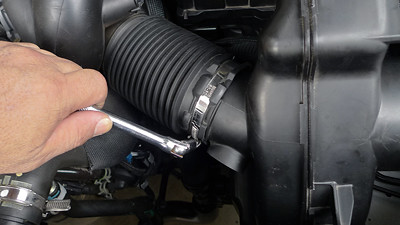
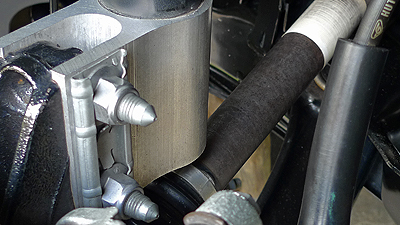
All hoses and wire connectors were checked for leak or/and loose. Everything was in perfect condition. Just like new. QC was excellent.

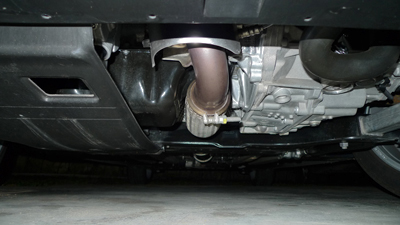
The sky was overcast. Expecting light showers within an hour or so. The car was then pushed into the garage at ease, no squeaking sound of trapped sand or debris between the pad and the disk, also no problem with wheel bearings. Then crawled underneath to check for traces of oil or other fluid leaks. Also perfectly clean. No leaking, no seeping at all.

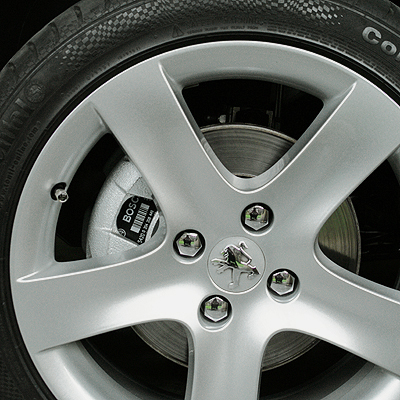
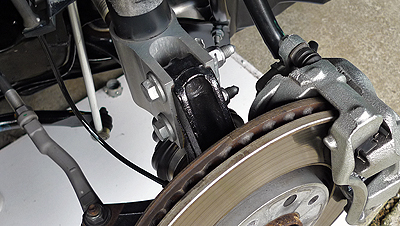
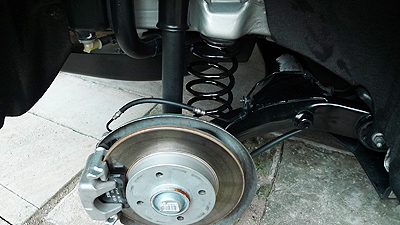
The car was then driven to the front porch. Wheels were removed to inspect braking system.

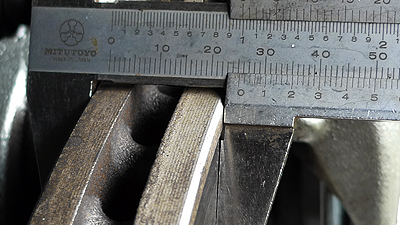
Brake pads still got 10mm balance. The disks were all worn out evenly, both front disks already 0.5mm thinner on each surface though. Tyres were inspected but no damages found. Worn out evenly with approx. 80% of remaining thread depth.

Wheels were then cleaned and waxed to make them look like new again. No scratch at all hence polishing was absolutely unnecessary at then.

Tyre wells were also inspected and cleaned. Nothing went wrong. Everything in perfect condition. Both in front...

...and at the rear.

The last test was 'pap smear'. To check for how effective the combustion and emission control was. The car was warmed up first. Tail pipe was cleaned from previous deposit of carbon black and then taken for a spin at normal pace. No hard acceleration. Upon returning to the porch a piece of tissue paper is rubbed on the inside surface of the tail pipe and here it is...

Very minimum carbon soot. Relatively clean
backside, but a little bit smelly,
ha haaa...
By then everything was inspected. Nothing went wrong and the car looked like brand new again... except for one thing though. As tyres worn out, there was a very slight drifting to the side just like my old W124. It was also time to rotate the tyres.

Regarding 'mild' or 'bearable' drifting to the left
advices. It is a bullshit and waste of money to go to the tyre shops to adjust toe angle alone in order to rectify it. No way.
Toe-in is actually to correct understeer while toe-out is for oversteer compansation. I bet if all tyre shop mechanics know this.
Its camber and caster angles need adjustment if the car drifts sideways apart from rear axle 'not 90-degree' [perpendicular] to the car axis. If a car cannot be adjusted for camber and caster angles there is a simple way but proven successful. Everybody can DIY simply by
juggling tyre rotation [swapping].
The following what I did by taking advantage of the different rate of wear between front and rear tyres.... [after clocking 12,000km]
First I did for LHS tyres. I swapped between FR and RR. Took a spin for a quick test. Pulling to the left was felt even more.
Then I swapped FL and RL tyres. Took another spin. The there is a mild pulling to the left.
Next I changed back LHS tyres to the earlier position.
Tadaaaa.!!!.. no more drifting. It seemed that swapping between FL and RL tyres was good enough. The car went perfectly straight at any speed. If drifting persist, I would have to swap between FR and FL or/and RR and RL tyres.
 "The car looks and feels almost like it was 6 months ago... simply loved it, again.
" - uncle.D
THE END for today...
Frequently Visited Pages:
|
Home |
Fuel Consumption |
Performance |
uncle's DIY |
Car Size Comparison | Motoring Myths | RON95 |